Week Two: 232 miles Fernandina Beach, FL to Bluffton, SC
April 17-24, 2022
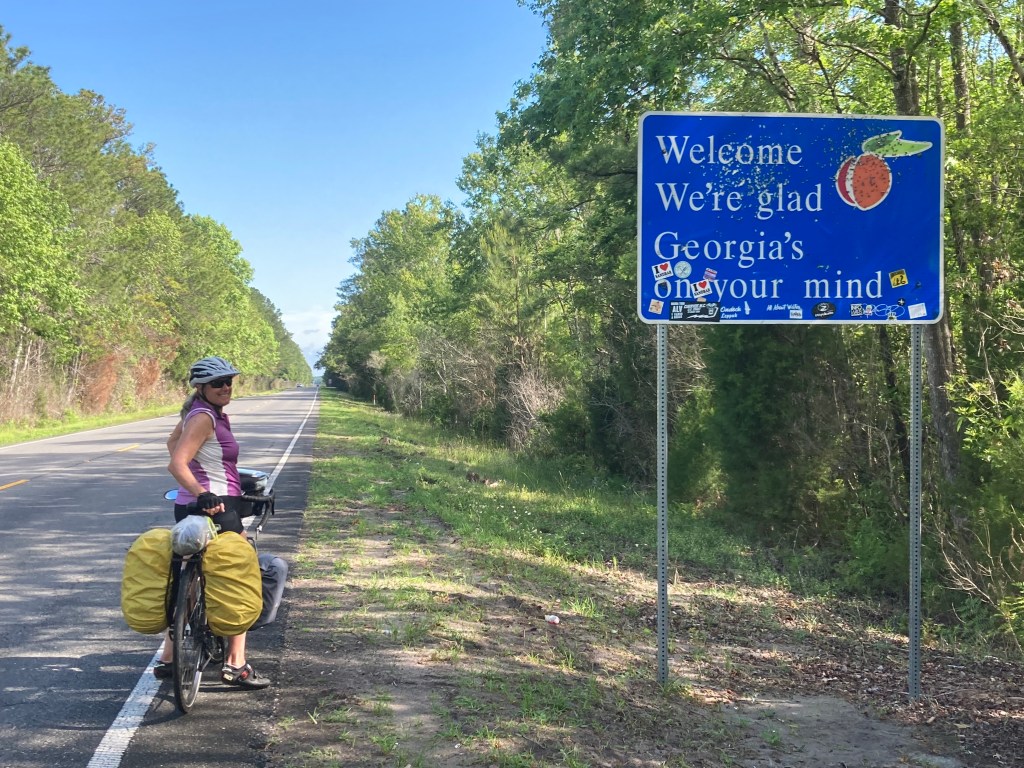
I can’t recommend riding in Georgia. While Florida has a plethora of paved beautiful bikeing trails and wide smooth shoulders on its highways with well-marked bike lanes, Georgia has none of that. When we had to ride on a highway, which was often, we were relegated to a small bit of shoulder with a rumble strip directlty to our left. The only nod to cyclists were signs before bridges telling motorists to share the road.
There is lovely scenery in Georgia, but we didn’t find it along the Adventure Cycling route. Instead we saw lots of trees, collapsed buildings, and modest homes.
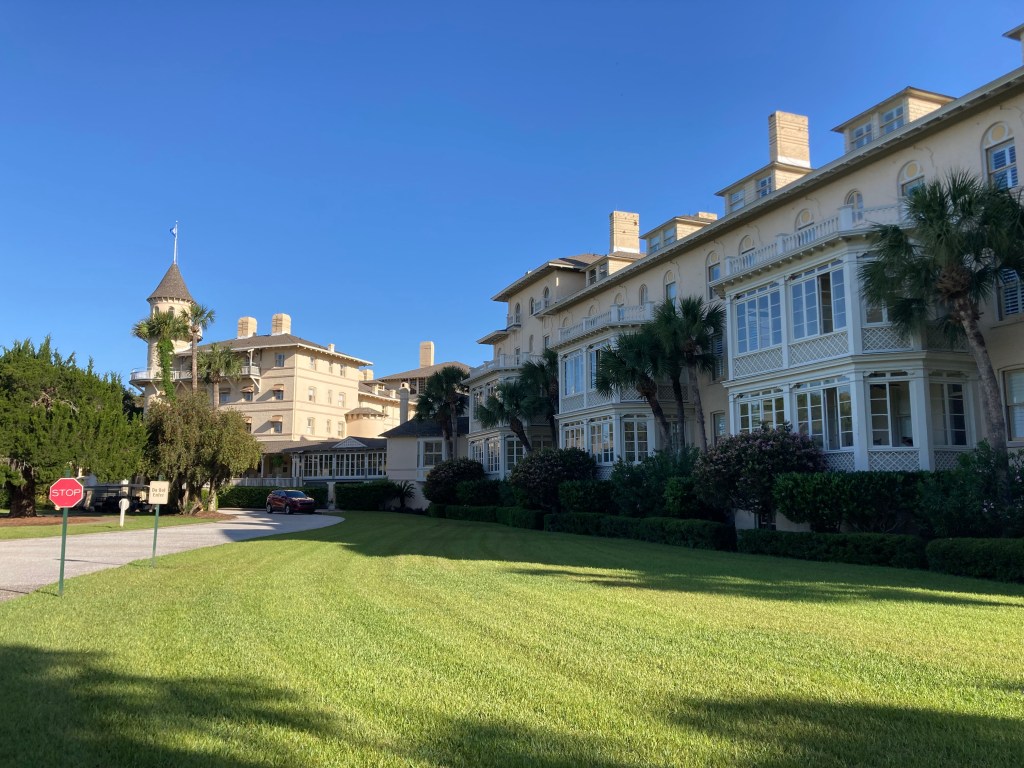
When we ventured off the Adventure Cycling route we stayed in a couple extraordinary places, on Jekyll Island at the historic Jekyll Island Club Resort and on Skidaway Island where my cousin lives.
Our journey into Georgia began on Easter Sunday when we rode out of Florida onto a mix of country roads and state highway 17. We stopped for lunch on the Satilla River in Woodbine, Georgia.

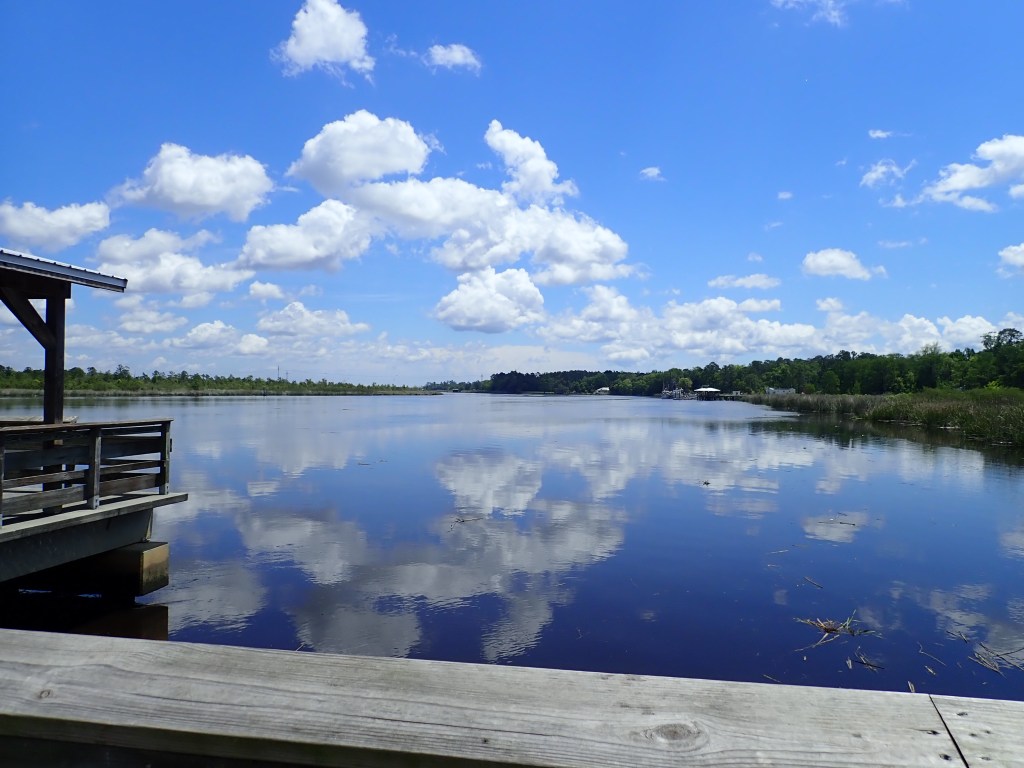
After 52 miles we arrived at a private campground outside the town of Brunswick with time to relax at the pool. We were happy that we were able to camp next to a shelter, as a thunder storm moved in just as we finished dinner.
Monday morning we comfortably rode the 13 miles to Jekyll Island.
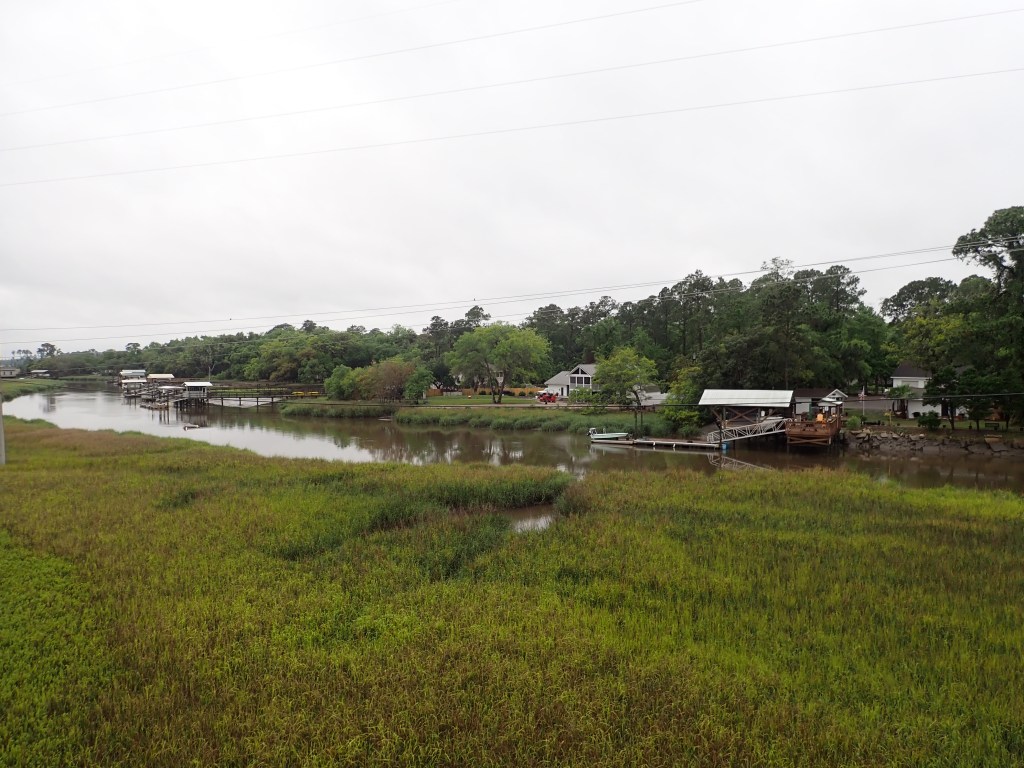
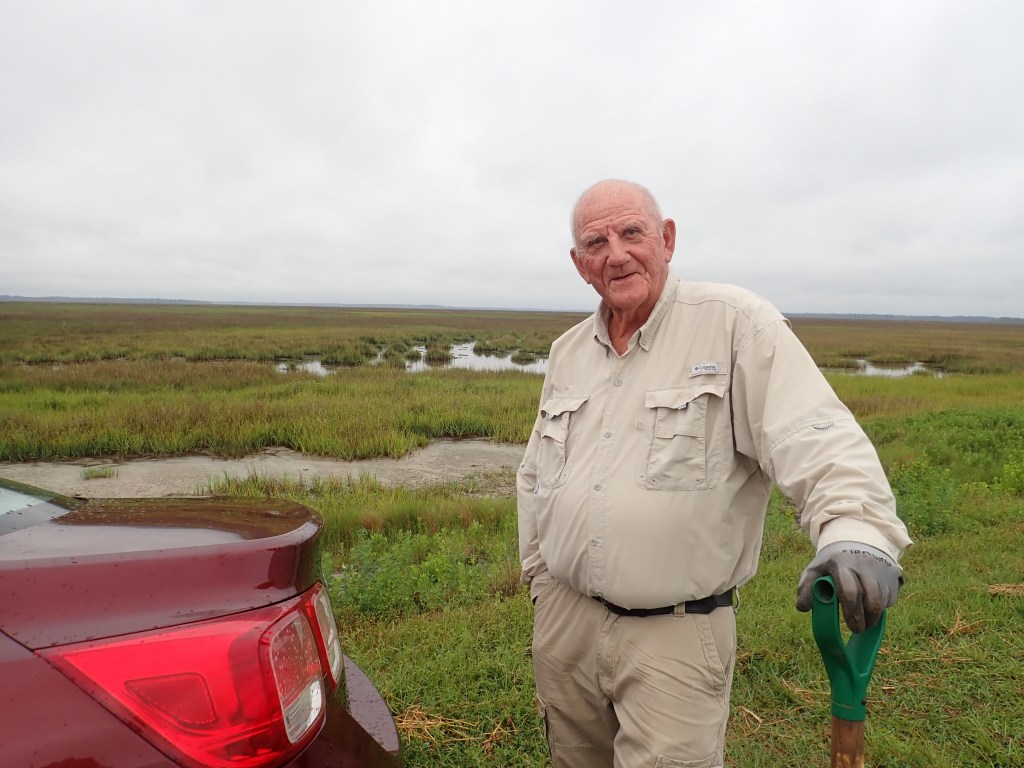
While riding on the causeway to the island I saw this old guy digging along the side of the road and stopped to see what he was digging for. He showed me his bucket of pincer crabs and said he used them as fishing bait for sheephead.


By 9:00 we arrived at the Jekyll Island Club Resort.
After checking into our rooms we visited the Georgia Sea Turtle Center.
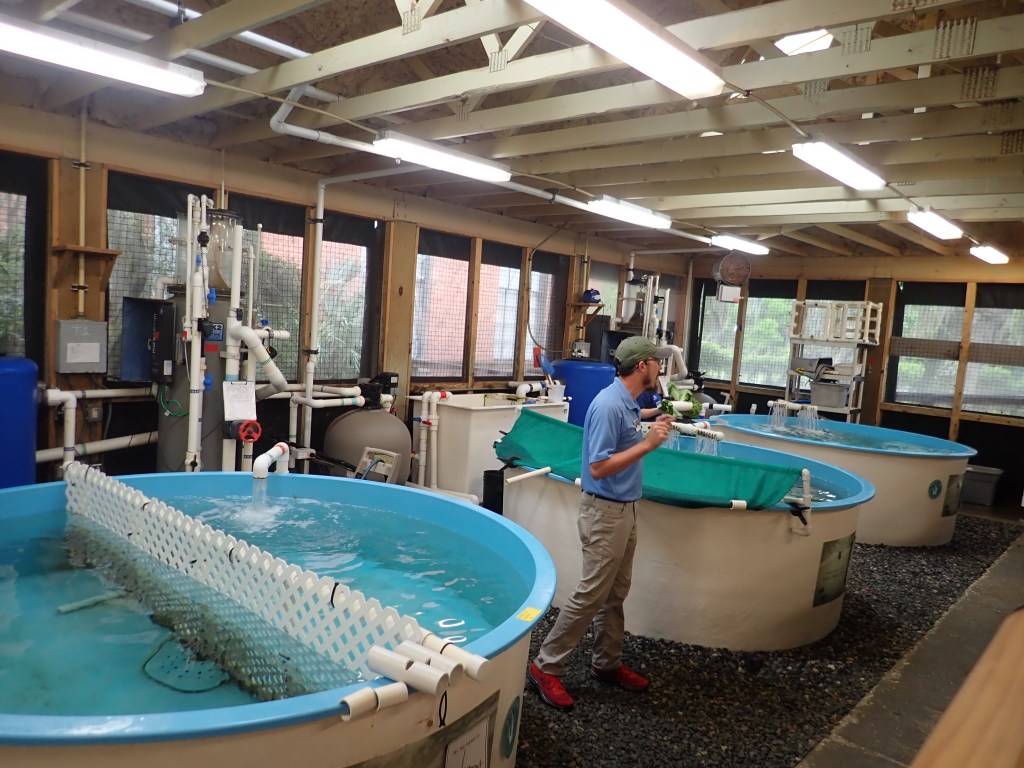

Sea turtles who are sick or injured and are lucky enough to be rescued might find their way here where they will be rehabilitated and released back into the wild. One of the turtles who had been injured by a boat propeller was paralyzed in its hind legs so couldn’t be released and was waiting for a new home in a zoo or aquarium. Several of the turtles had been rescued from the cold waters of the Cape Cod Bay. Evidently every November, rather than swim around the Cape, a good number of turtles get caught inside the bay and get sick when exposed to the cold waters. Many are rescued and, when the New England Aquarium can’t take in any more, they are flown to other sea turtle centers for rehabilitation.
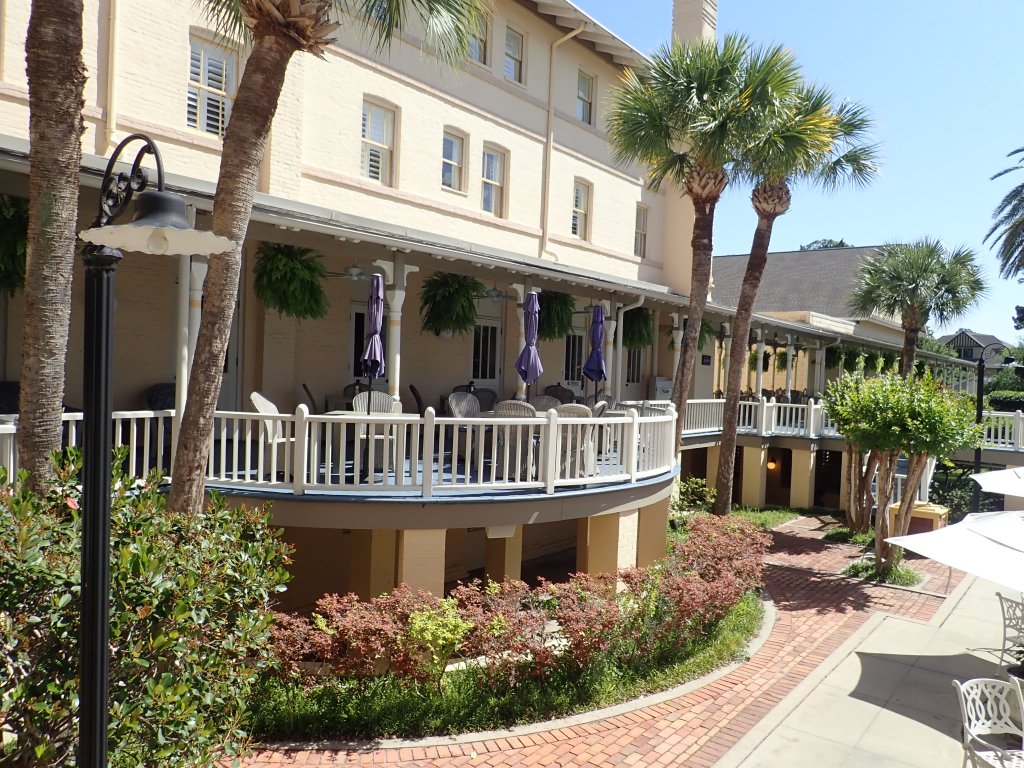
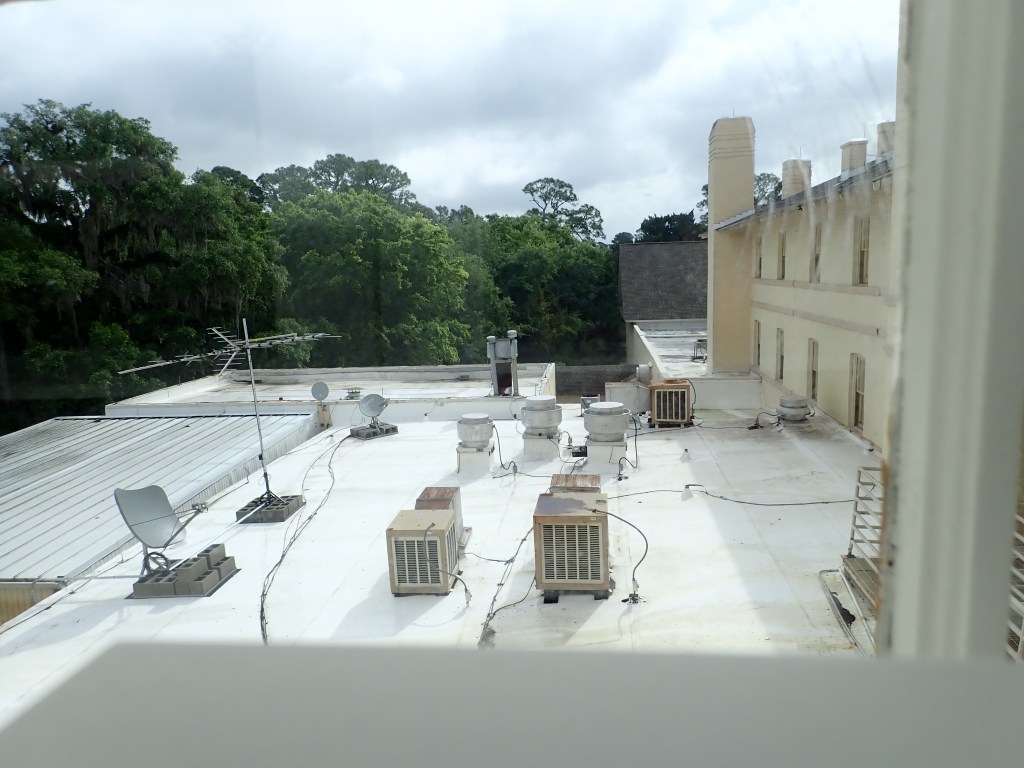
After lunch we bicycled around the island. It was an easy 18 miles ride and rather unremarkable. Then we stopped by the pool for a beer and a swim.
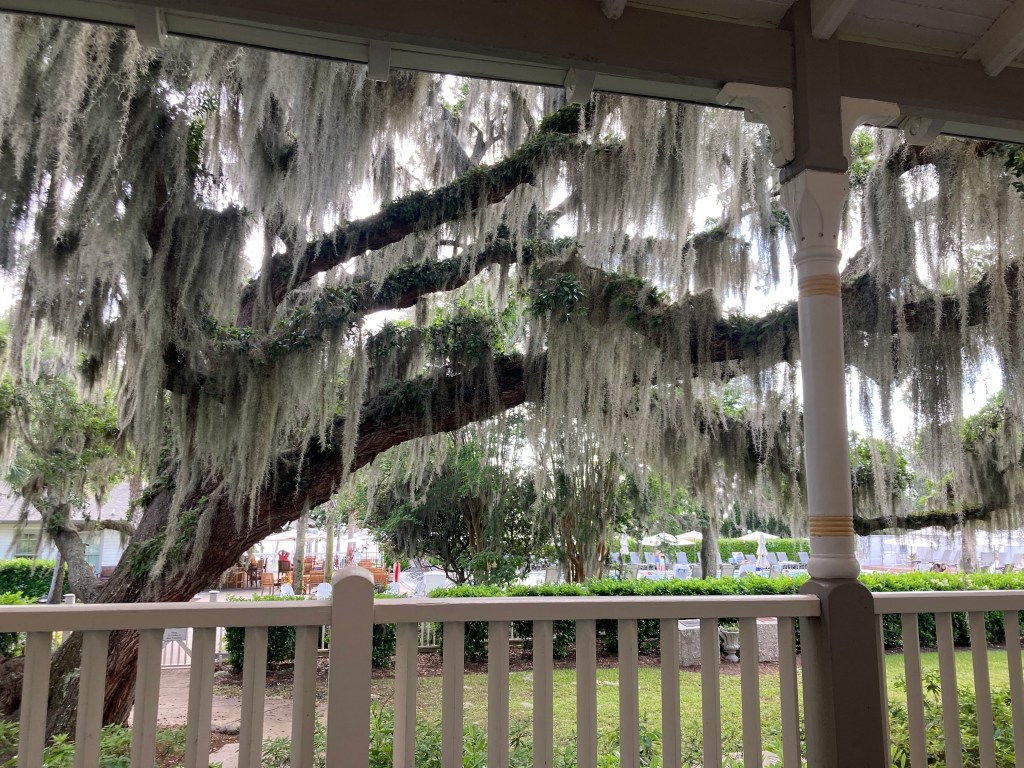
The hotel has an extraordinary grand dining room but, like so many restaurants, they are unable to staff it so it wasn’t open. Instead they offer a shuttle to the Eighty Ocean restaurant on the ocean side of the island where we enjoyed dinner.
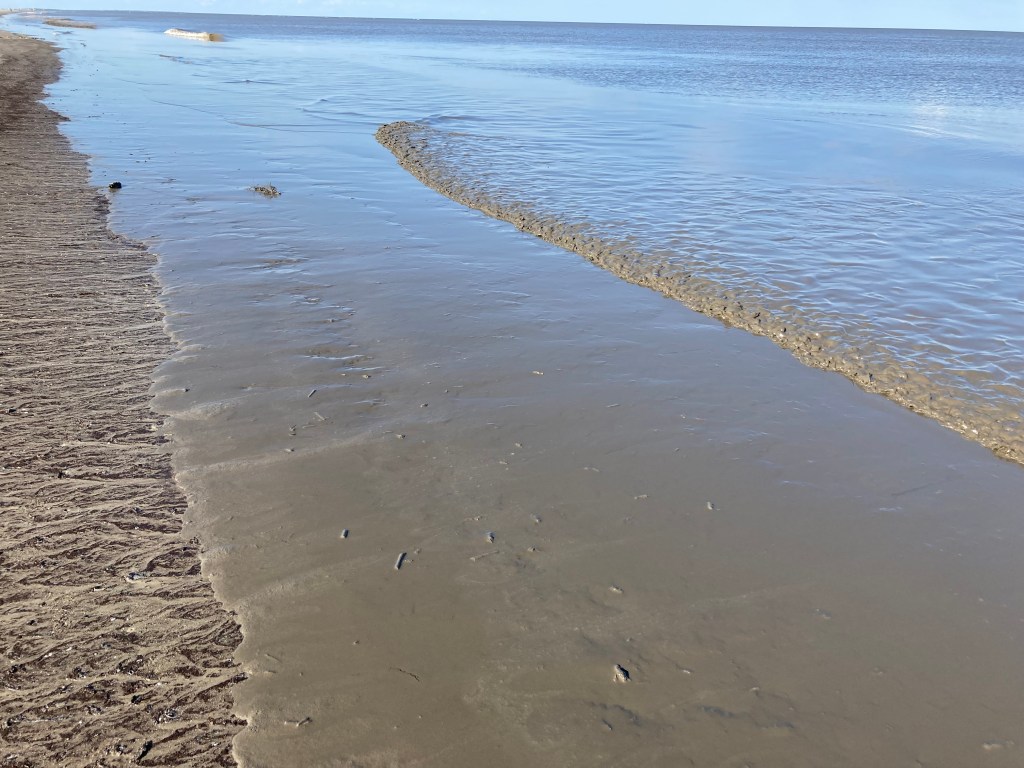
On Tuesday we only had between 40 and 50 miles to cover so we spent a good part of the morning enjoying more time on Jekyll Island.
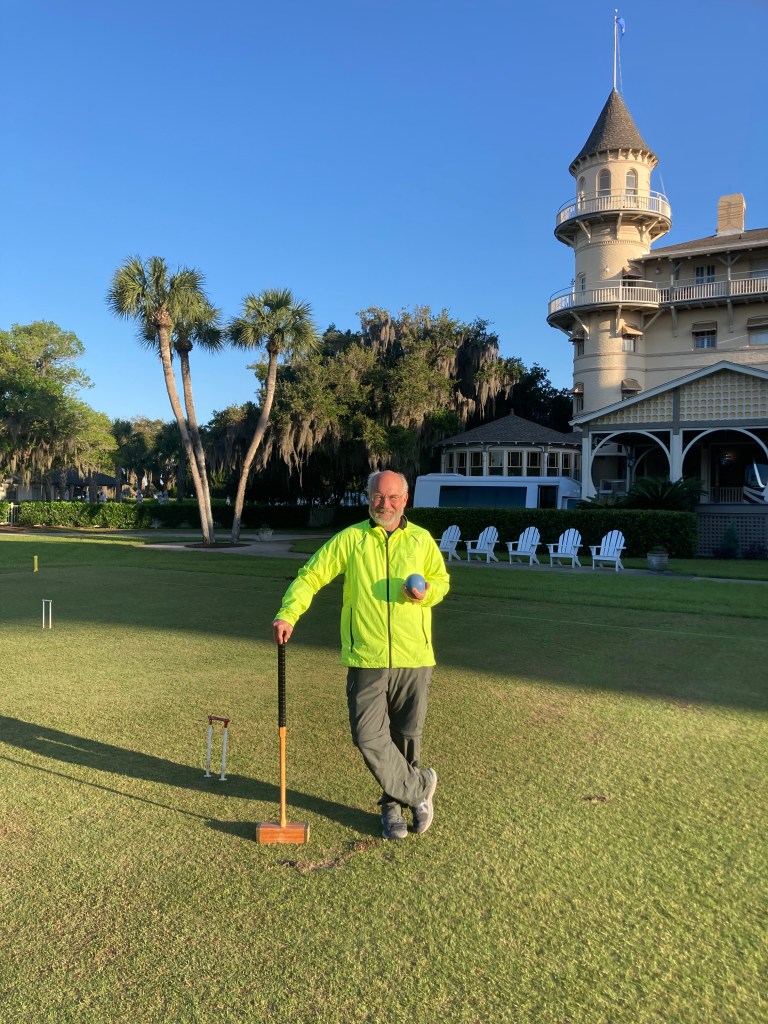
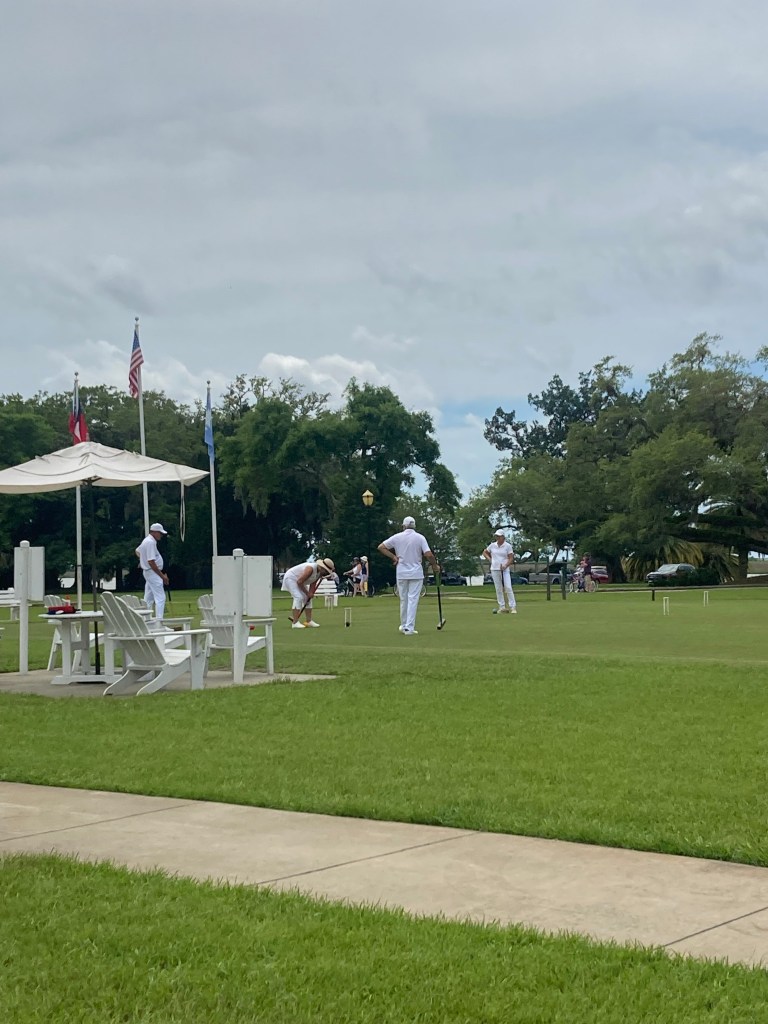
We spent about an hour wandering through the historic district surroundingggg the hotel. The Jekyll Island Club Hotel is part of a national historic landmark district. According to the Jekyll Island website, “in 1886, Jekyll Island was purchased to become an exclusive winter retreat, known as the Jekyll Island Club. It soon became recognized as ‘the richest, most inaccessible club in the world.’ Club members included such notable figures as J.P. Morgan, Joseph Pulitzer, William K. Vanderbilt, and Marshall Field.” A good number of the club members built their own cottages near the hotel. Evidently Pulitzer didn’t fit in all that well as his politics differed dramatically from those of the other members.

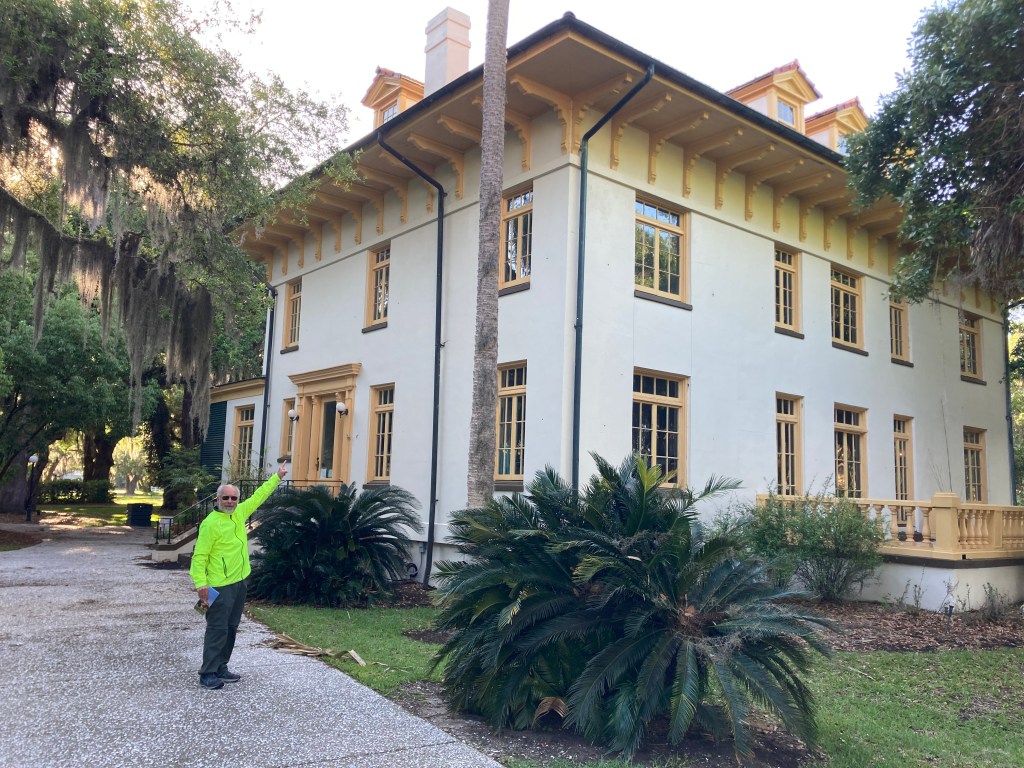
We got on the road shortly after 11 o’clock, the first day it was cool enough to wear a windbreaker, and the first day we had significant wind. Riding the causeway was pleasant. In Brunswick we picked up the state highway 17 again and were on it for about 18 miles. That was not so much fun, lots of traffic and not a great shoulder.
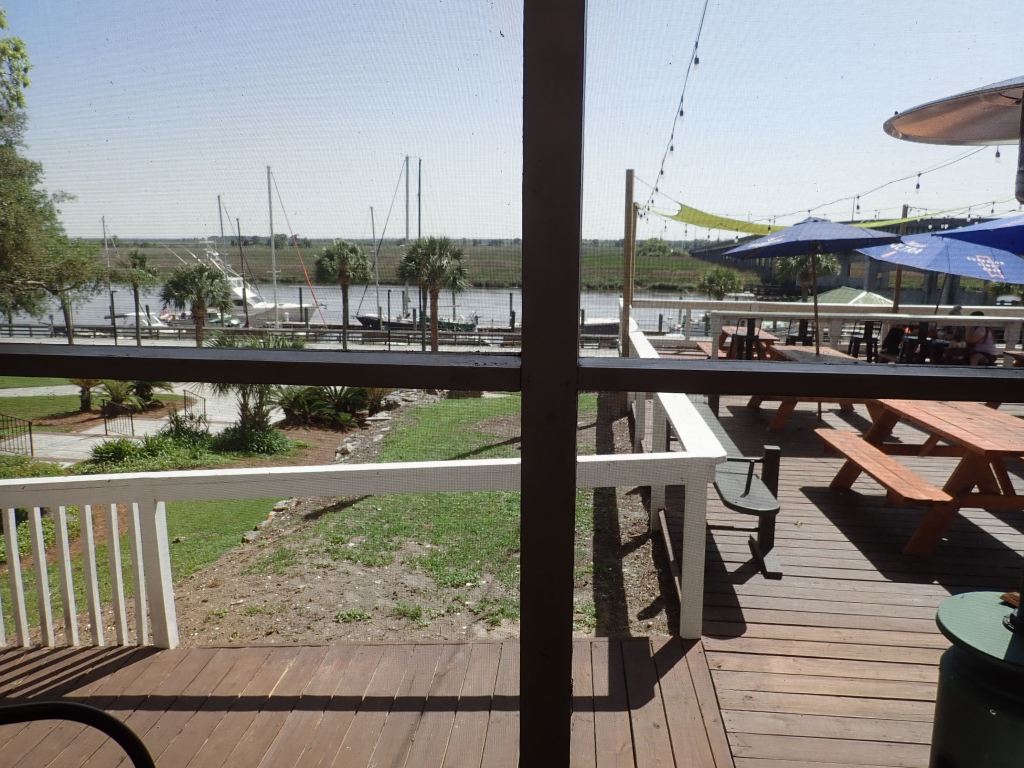
We crossed a bridge into Darien and immediately came to the Spartina Grill advertising their Tuesday special of two shrimp tacos for $12. That sounded pretty good, and we’d seen their back patio right on the river. The tacos were delicous. We asked the server if they were local and she said yes. She told us that her husband is a shrimper and that she came from six generations of shrimpers. I mentioned that we’d learned about how Georgia has a law that shrimp nets have to have a system for releasing turtles and she said they call it a “turtle shooter.” She said that after the shrimp season her husband gets paid to go up to South Carolina and pick up turtles that are in areas where they might get injured by motorboats and release them in safer waters. I asked if she’d ever done any shrimping and she said she sure had; her daughter took her first steps on a shrimp boat.

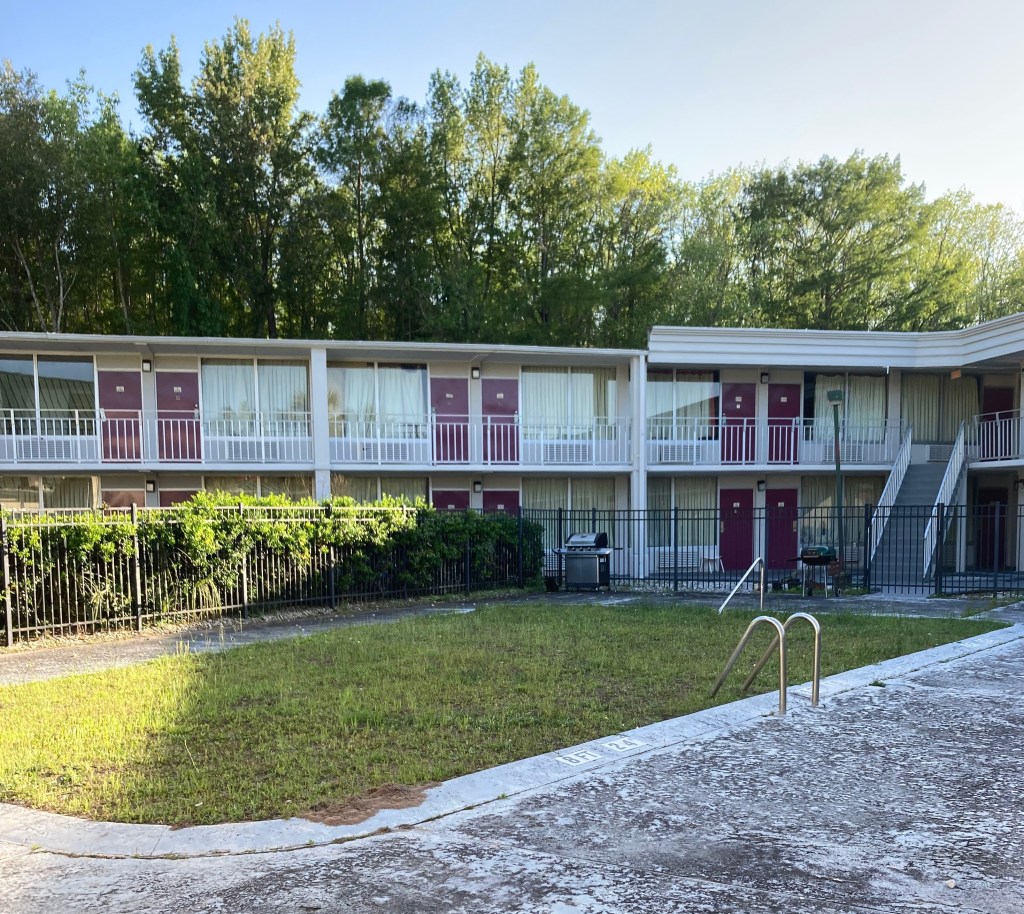
From Darien we rode along a quiet county road that was quite pleasant and another 10 miles or so brought us to Townsend and our Motel 6. Quite a contrast to the previous night. We had dinner next door at the Huddle House restaurant. Burgers, fries, and ice cream sundaes for $27.

Wednesday’s riding was long and awful. We had a few stretches on back roads which were mostly pleasant although the scenery was unspectacular. Just lots of trees, occasional marshland, some areas of unsightly clearcutting, and modest or rundown homes. But what made the day set a new standard for the Worst Day Ever was the unsafe riding on busy highways.
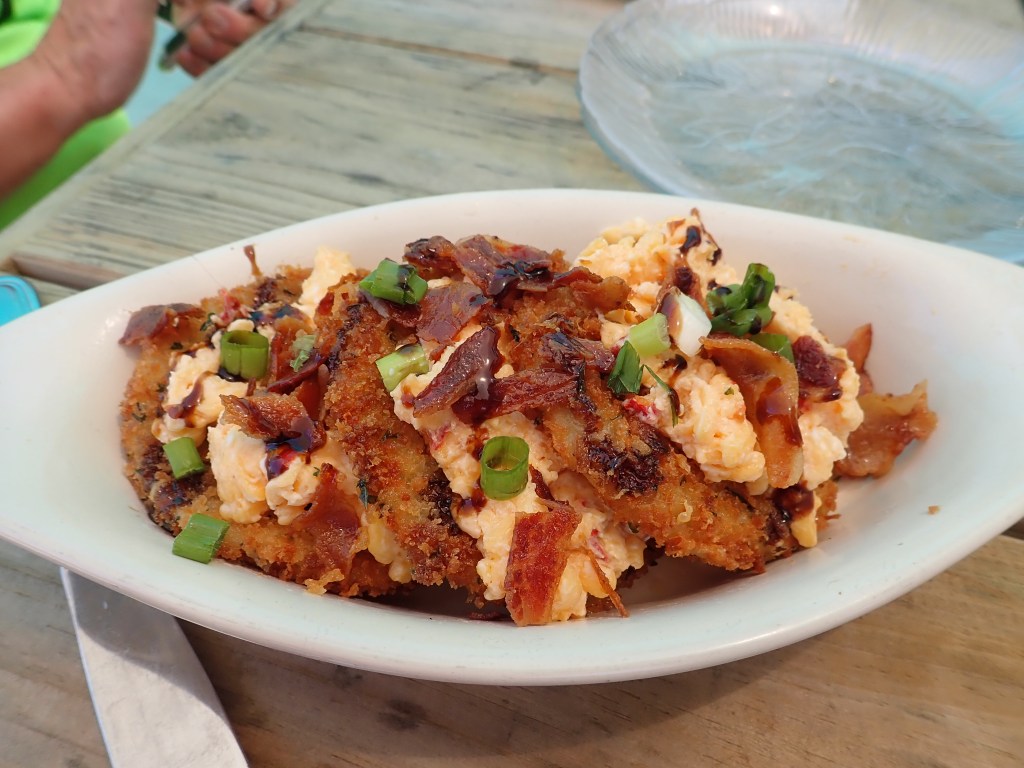
The only saving grace about the day was a stop on the outskirts of Richmond Hill at Bubba’s Bistro for sweet tea and fried green tomatoes. (Rob had a beer. He always does when I enjoy a sweet tea.)
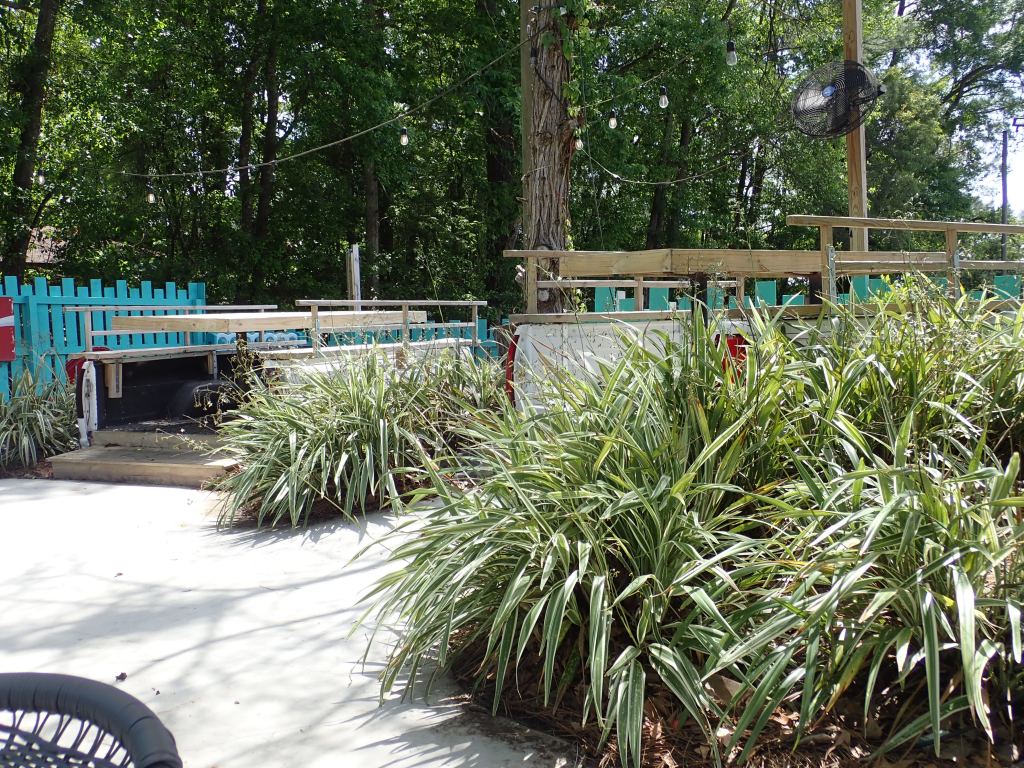
When we were at Bubba’s our server told us she’d seen us riding on the road she lives on. She told us that her house looks out onto the water and she sees all sorts of wildlife – dolphins, gators, boa constrictors, rattlesnakes, and birds of all kinds. She said that the pamphlets enticing people to come to Georgia don’t talk about the snakes and other dangerous critters. She never goes fishing without a sharp knife at the ready.
We had far too many miles – at least 30 – on State Route 17. There was only a narrow shoulder and half of it had a rumble strip, right next to the white line which left us hugging the soft side of the road. You couldn’t take your eyes off the road for a minute or you’d drift onto the rumble strip or off the road. Throw in lots of speeding traffic and a head wind. Aside from occasional clumps of wildflowers there was nothing else to distract from the wretchedness of the ride. I told Rob that this was up there with our worst days but – hands down – I’ve never felt so scared for so many miles. The last few miles on 17 we didn’t even have a shoulder to ride on and cars were passing with what felt like inches to spare.
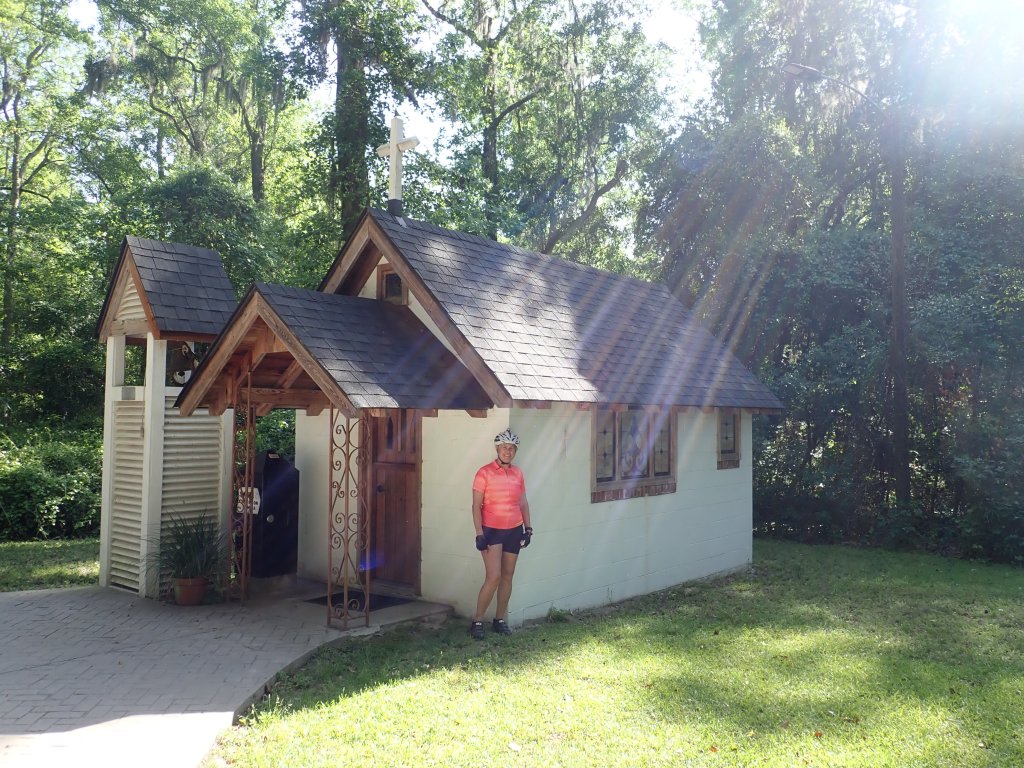
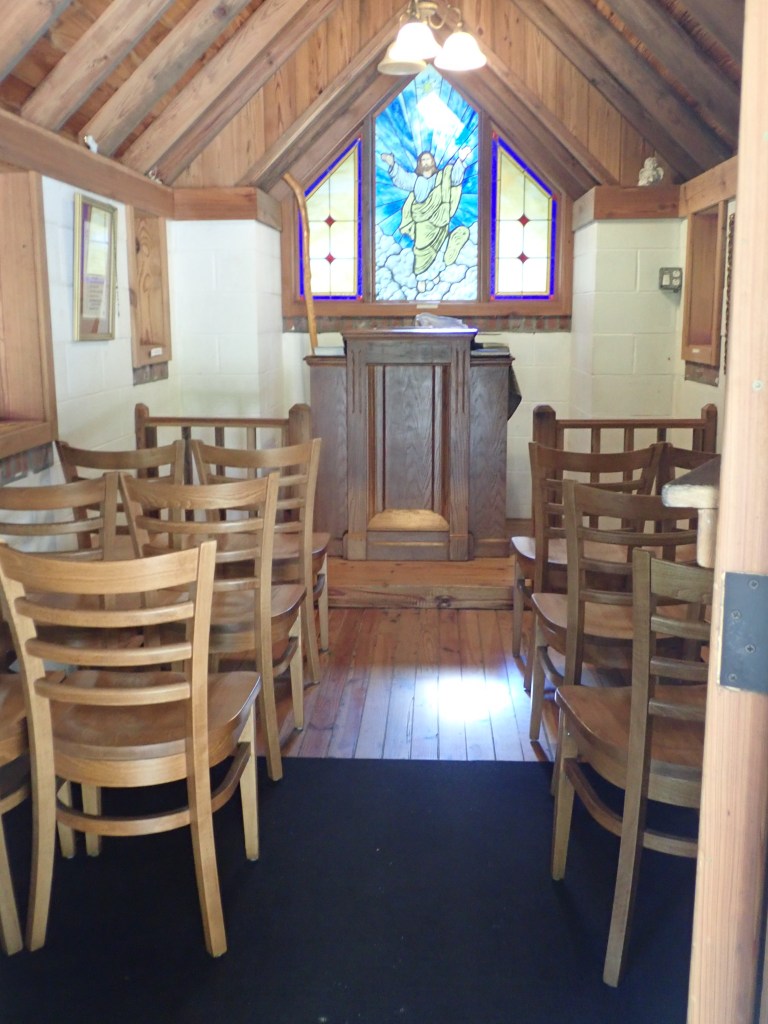
We were relieved when we finally made it to my cousin’s upscale neighborhood on Skidaway Island and could relax riding past the beautiful homes and landscaping. We arrived at Georgine and Jim’s home just after 6 o’clock. Wednesday was our longest day yet, at 74 miles.
We looked forward to a couple days visiting with them, their son and daughter-in-law, and my other cousin Paul who was driving down from Atlanta Thursday morning.


(Derek pulled this shot from a video he caught.)

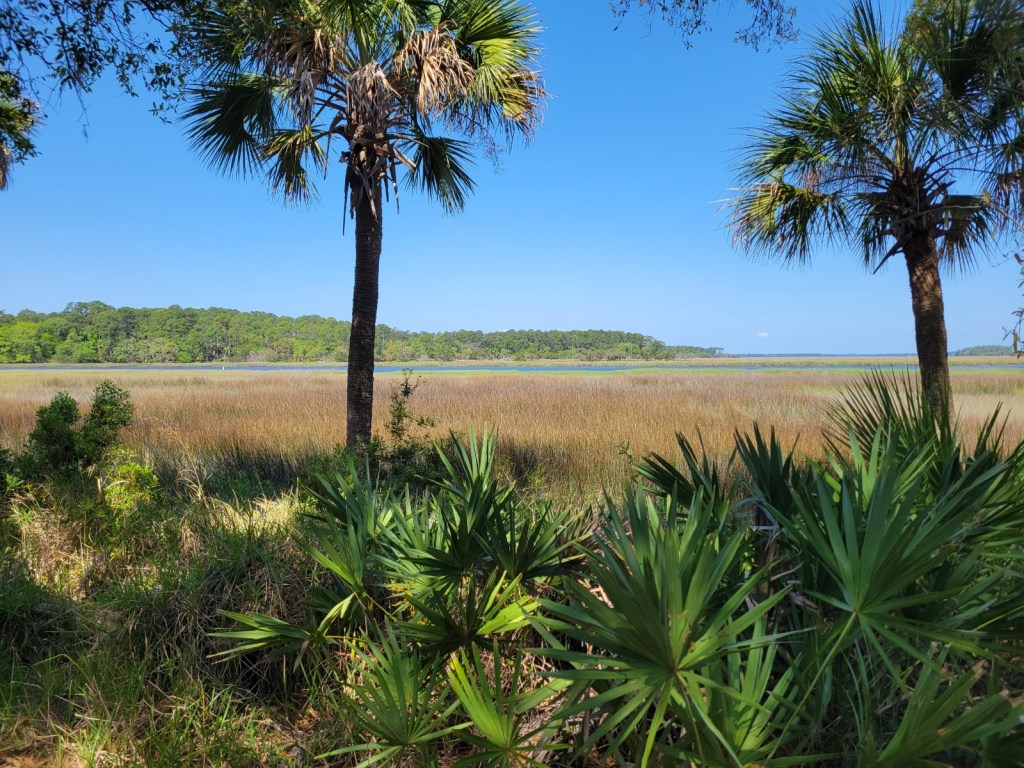
Friday afternoon we went into downtown Savannah to explore the Prohibition Museum at a friend’s recommendation. None of the Georgians had been previously and we all enjoyed it.
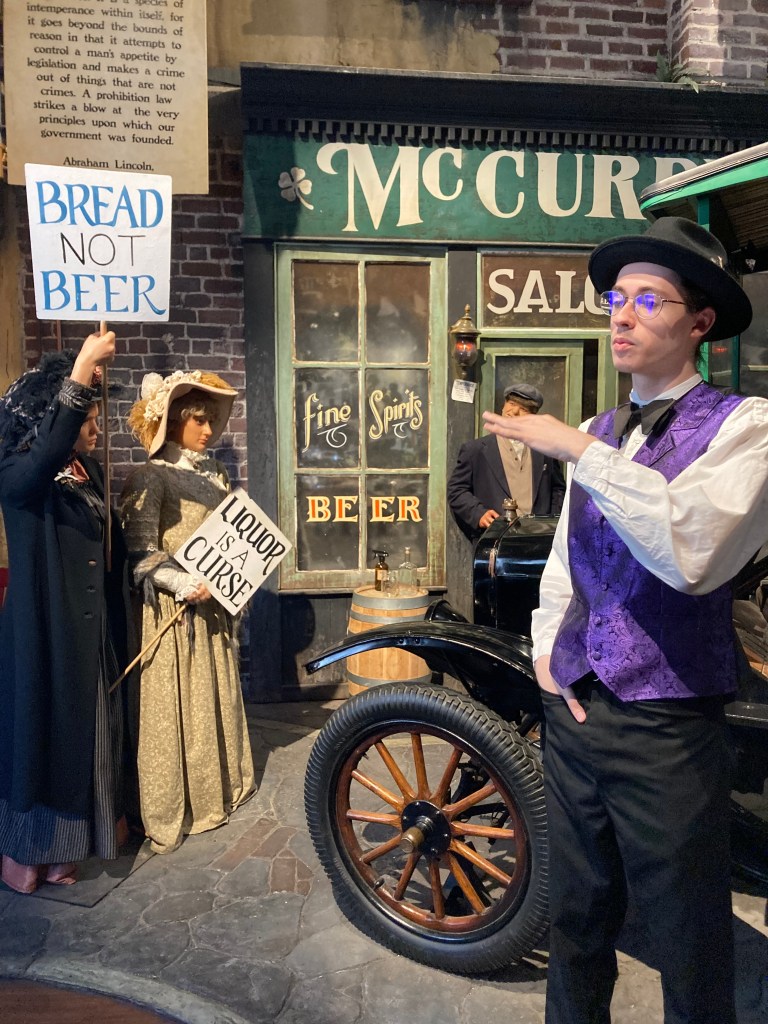
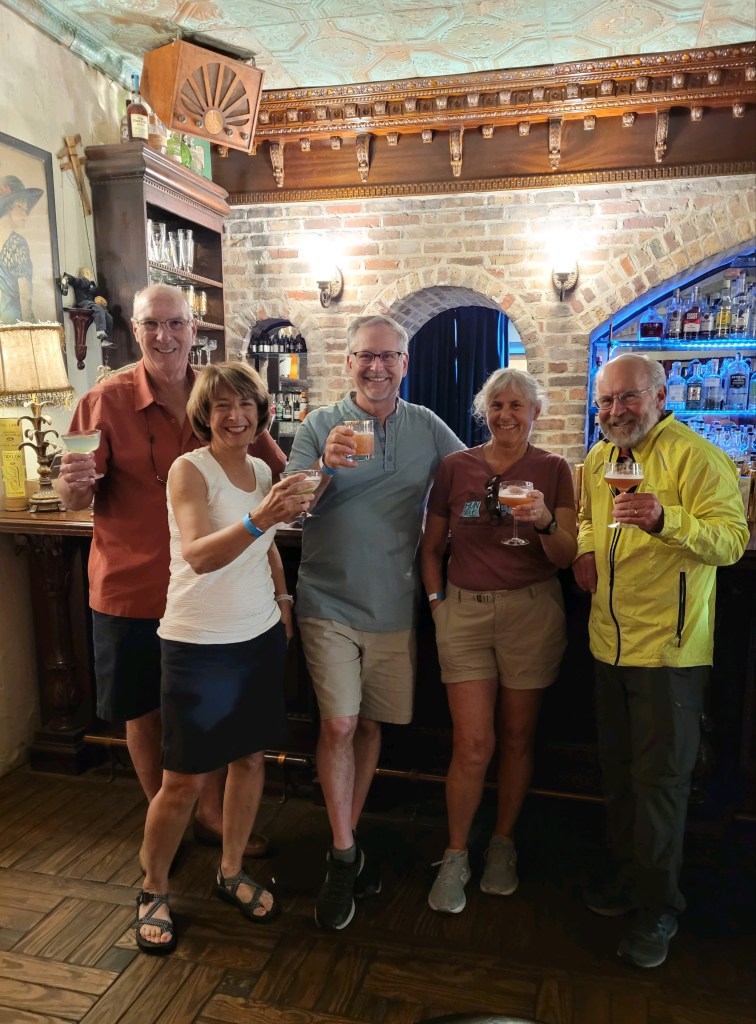
It was heartbreaking to see old film clips of government agents smashing bottles of whiskey and dumping out barrels of beer. Interesting fact about prohibition is that it gave rise to both the income tax and NASCAR racing. The income tax because previously the government had counted on taxes on liquor to pay its bills, NASCAR racing grew from the need to drive faster than the police with a carful of illegal alcohol: “Moonshiner put more time, energy, thought, and love into their cars than any racers ever will. Lose on the track and you go home. Lose with a load of whiskey and you go to jail.” – Junior Johnson, NASCAR Legend.

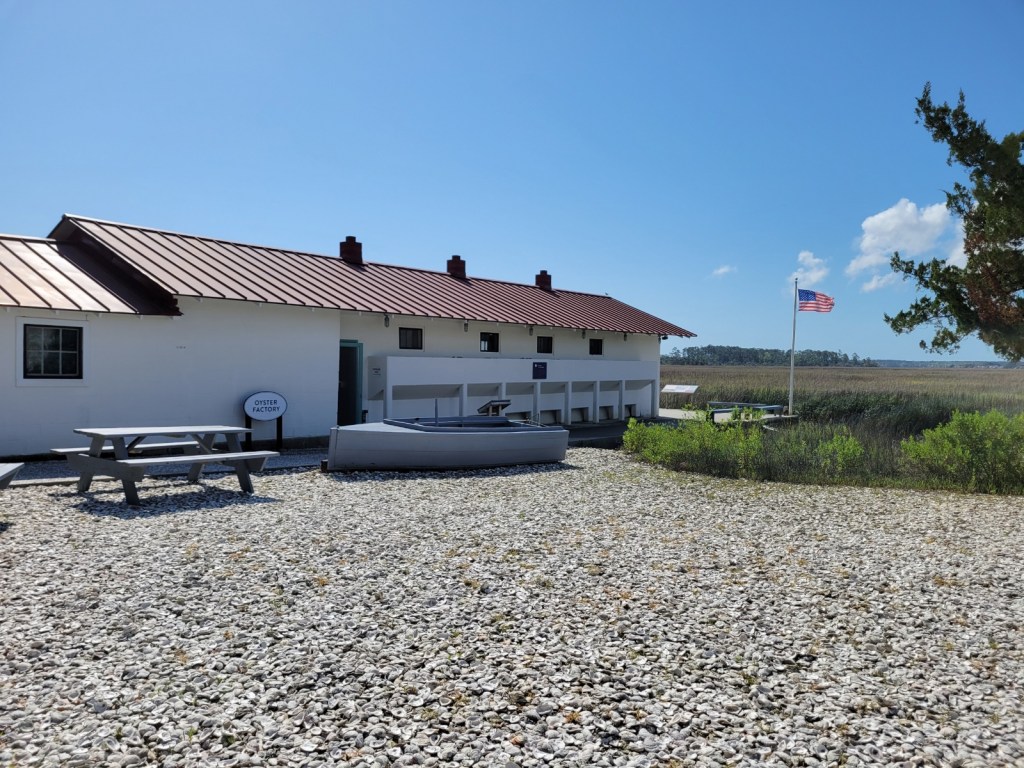
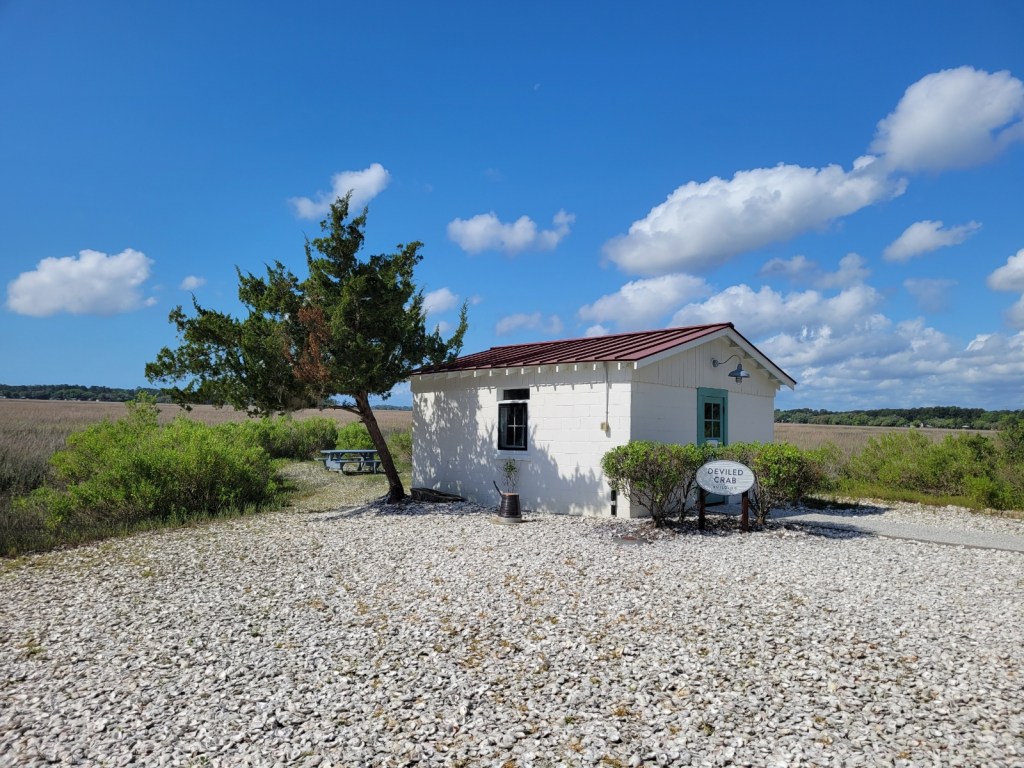
Saturday our plan was to play tourist for a while in Savannah before cycling about 30 miles to a Warm Showers host in Bluffton. It worked out very well. Cousin Paul agreed to drive us and our bikes the 15 miles into downtown Savannah and he was also interested in stopping off at the PinPoint Heritage Museum along the way. The land where the PinPoint community sits was purchassd in the 1890s by freedmen, of the Gullah/Geechee community of former enslaved people from what is now Angola. They were able to buy land in the salt marshes that was considered undesirable by whites. Supreme Court Justice Clarence Thomas is from PinPoint. The museum sits on the site of the former oyster and crab factory which provided a meager living for the people of the community. Today PinPoint is the only remaining Black-owned community along the southeastern coast.
After Paul dropped us off downtown we walked to the riverfront in search of the African American Families Monument. Dedicated in 2002, it was the first statue in Savannah that honors African Americans.

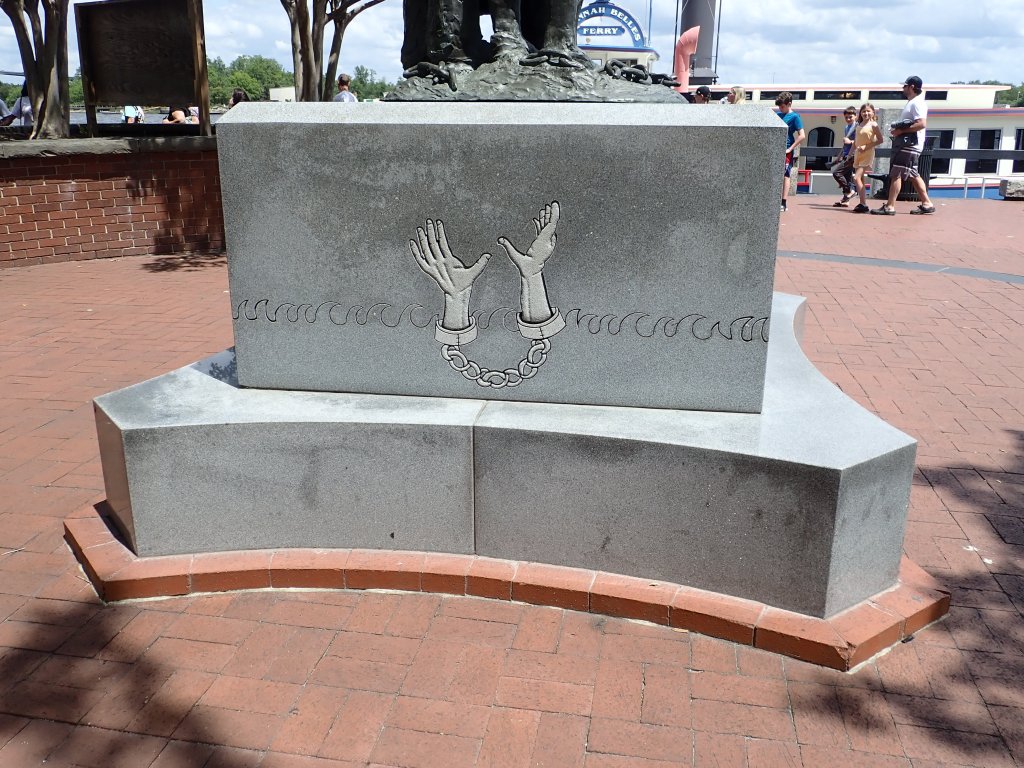
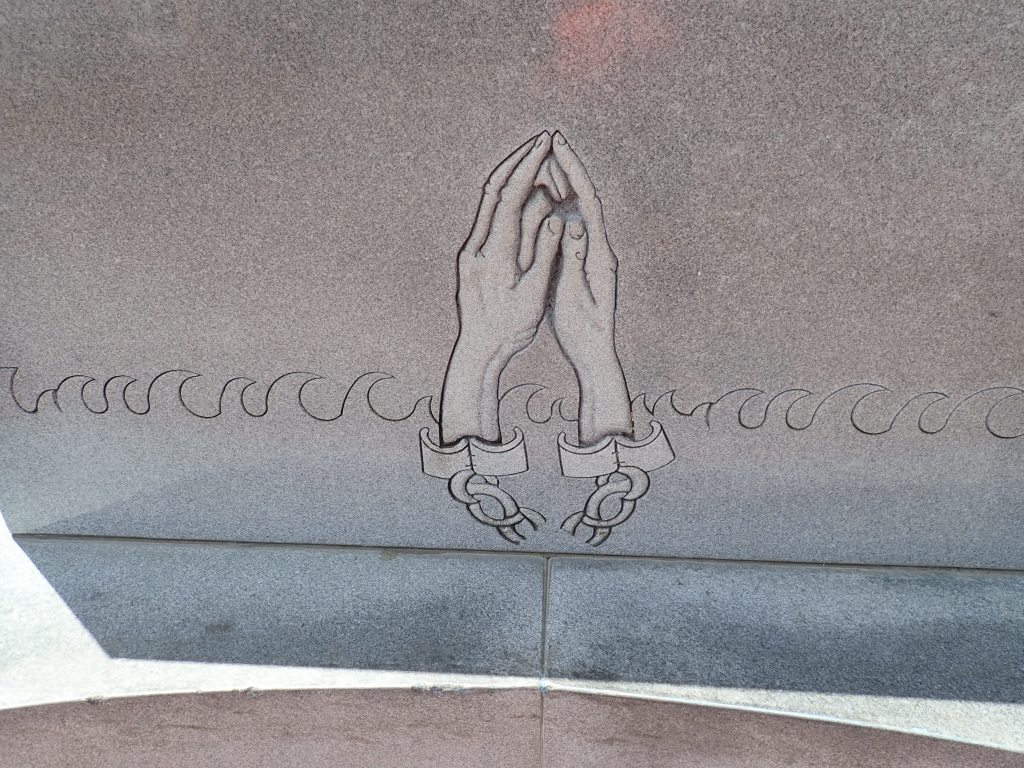
A quote by Maya Angelou is carved into one side of the base: “We were stolen, sold, and brought together from the African continent. We got on the slave ships together. We lay back to belly in the holds of the slave ships in each others excrement and urine together. Sometimes died together. And our lifeless bodies thrown overboard together. Today we are standing up together with faith and even some joy.”
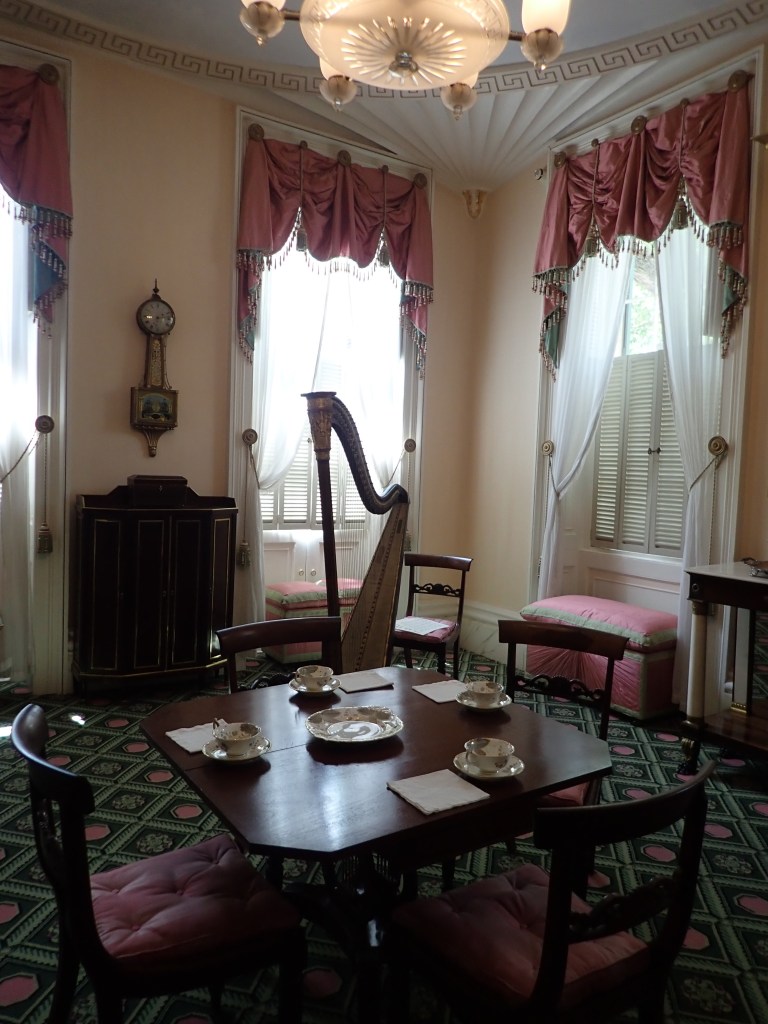
Traveling through the southern United States on our bicycles in 2020 I was struck by the absence of a candid discussion of the role that enslaved people played in creating the wealth of white southerners. When we couldn’t book any walking tours that focused on the history of African Americans, Georgine suggested we tour the Owens-Thomas House & Slave Quarters. It was exactly the kind of historical tour I was looking for. Our tour guide told us that they use the term “enslaved people” rather than “slaves” to indicate that being a slave was something that was done to them rather than a role they chose. An exhibit at the end of the tour had excerpts of letters from the slave owners where they talked about their slaves, giving an indication of how they thought of them. One of the owners left money for several of his house servants in his will, but did not free them.
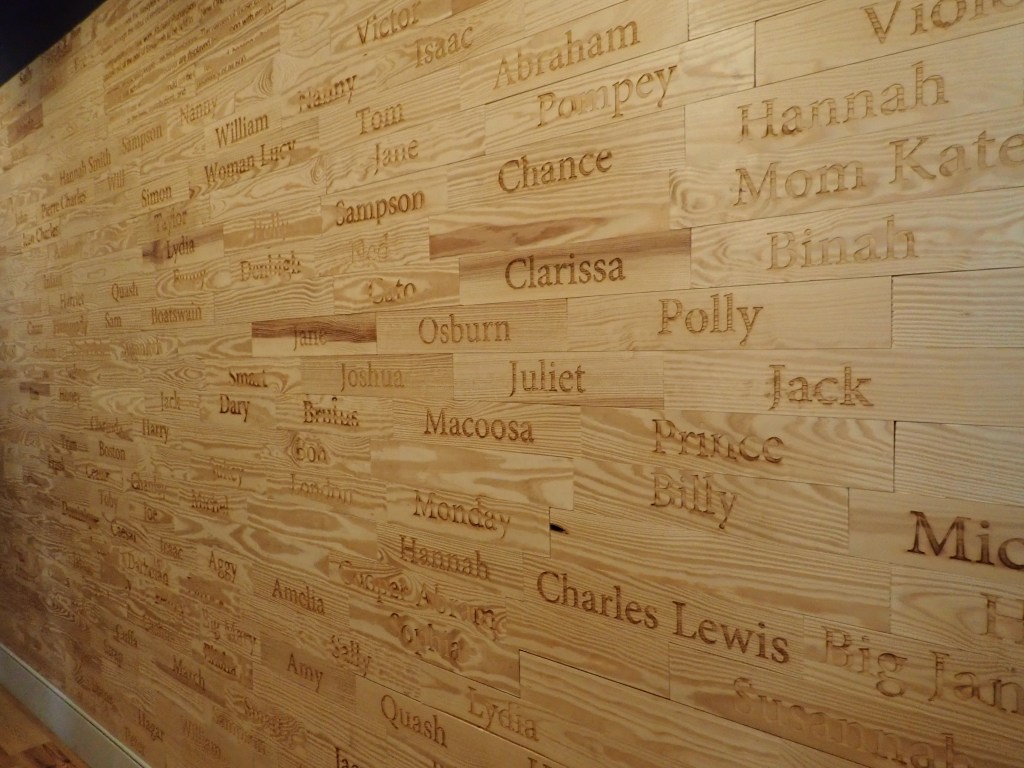
In 1830 the house was purchased by George Owens who moved in with his wife, six children, and nine enslaved servants. He also owned about 600 slaves who worked on his plantation. The wall below, in the former slave quarters, honors those people, with a block for each whose name was known, and blanks for those whose names have been forgotten.

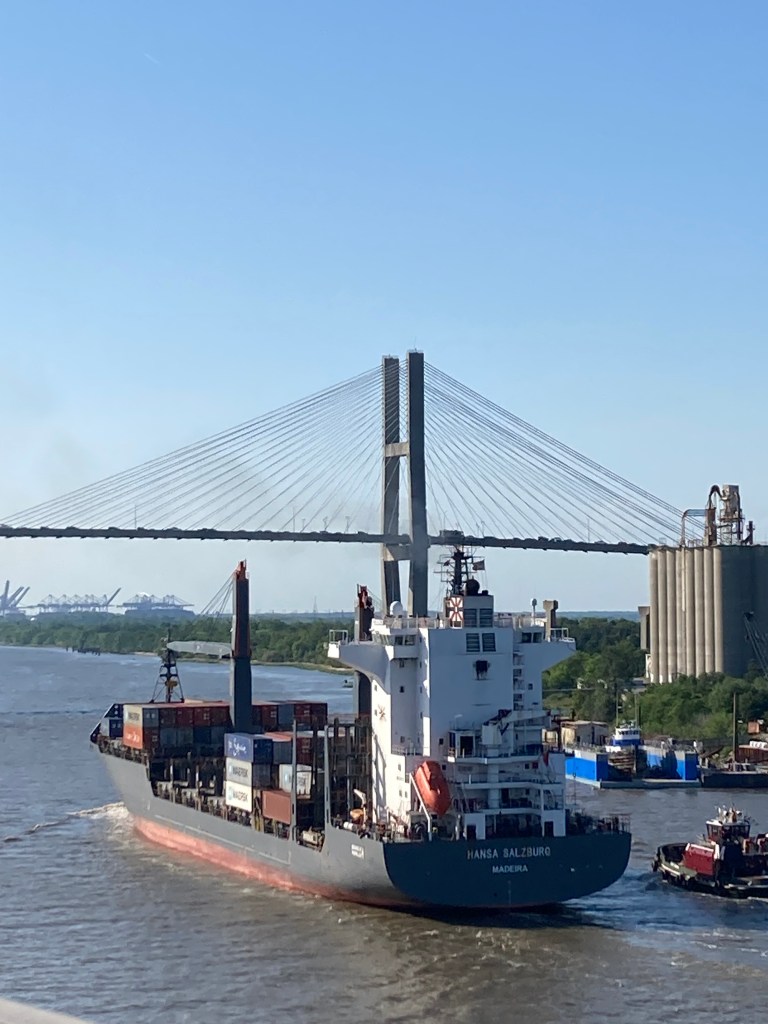
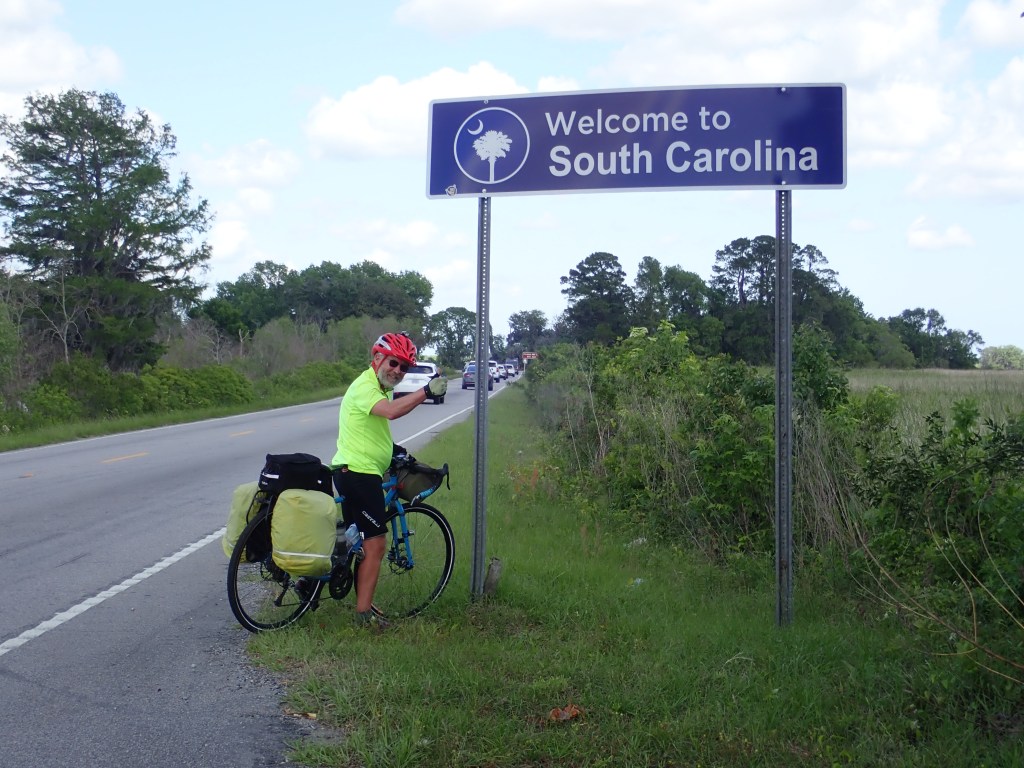
We left Savannah around 2:30 for a 30-mile ride to Bluffton. Along the way we passed mountains of cargo containers and rode through the Savannah National Wildlife Refuge into South Carolina. Gary, our Warm Showers host, escorted us the last five miles to his house. We enjoyed a vegetarian dinner and an evening of sharing stoies of cycling adventures with him and his wife, Lois.


WEEK ONE STATISTICS
- 232 miles; average of 46 miles/riding day or 33 miles/day overall
- 2 days off; 0 flat tires; 0 ferry rides
- Longest day: 74 miles
- Nights spent:
- 1 Warm Showers
- 1 Campground
- 2 Hotel/Motel/B&B
- 3 Family/Friends
For more details about our second week on the road see the Daily Log page.
 Out Spokin'...